3 min read
Why AI Automation Is No Longer Optional for Growing Businesses in 2026
Discover how AI automation is helping businesses reduce operational costs, improve customer experience, and scale faster without increasing headcount.

The Way Businesses Operate Has Changed
Just a few years ago, hiring more employees was the default solution for business growth. More customers meant more support staff, more operations managers, and larger teams.
That approach is quickly becoming outdated.
Today, businesses are expected to deliver faster responses, better customer experiences, and greater operational efficiency while keeping costs under control. Artificial Intelligence is making that possible.
Companies that successfully integrate AI into their daily operations aren't replacing people—they're allowing their teams to focus on higher-value work while repetitive processes happen automatically.
What Is AI Automation?
AI automation combines artificial intelligence with business workflows to perform repetitive tasks that traditionally required manual effort.
Unlike traditional automation, AI can understand context, analyze information, make recommendations, and continuously improve over time.
Examples include:
• Automatically qualifying incoming leads
• Responding to customer inquiries 24/7
• Scheduling appointments
• Generating reports
• Processing documents
• Summarizing meetings
• Managing internal workflows
• Routing customer requests to the correct department
Why Businesses Are Investing in AI
The biggest advantage of AI is not replacing employees—it's eliminating repetitive work.
When employees spend hours copying data, replying to routine emails, updating spreadsheets, or creating reports, valuable time is lost.
AI handles these repetitive tasks in seconds.
That allows businesses to improve productivity without constantly increasing operational costs.
Common Business Problems AI Can Solve
Customer Support Delays
Customers expect instant responses.
AI chatbots and voice agents can answer common questions, collect information, and even resolve many issues before a human representative becomes involved.
Manual Sales Processes
Sales teams often spend more time updating CRM systems than speaking with customers.
AI can automatically capture leads, update records, generate follow-up reminders, and summarize conversations.
Slow Internal Operations
Many organizations still rely on spreadsheets, emails, and manual approvals.
AI workflows automate approvals, notifications, reporting, and document processing, reducing delays and human error.
Data Overload
Businesses generate more information than ever before.
AI can analyze large datasets, identify trends, generate insights, and create executive reports in minutes instead of days.
Industries Benefiting from AI Automation
AI is no longer limited to technology companies.
Organizations across nearly every industry are adopting intelligent automation.
• Healthcare
• Real Estate
• Manufacturing
• Education
• Retail
• E-commerce
• Finance
• Logistics
• Hospitality
• Professional Services
AI Agents Are Becoming the New Digital Workforce
One of the biggest shifts in 2026 is the rise of AI Agents.
Unlike traditional software, AI agents can complete entire workflows.
For example, an AI sales agent can:
• Respond to new inquiries
• Qualify potential customers
• Schedule meetings
• Update the CRM
• Notify the sales team
• Generate follow-up emails
All without human intervention.
The Real Return on Investment
The value of AI isn't measured by how advanced the technology is.
It's measured by business outcomes.
Organizations implementing AI automation commonly experience:
• Faster customer response times
• Reduced operational costs
• Improved employee productivity
• Better customer satisfaction
• More accurate reporting
• Higher scalability
The businesses seeing the greatest success are those that automate repetitive processes while allowing employees to focus on strategy, creativity, and relationship building.
Getting Started with AI
Successful AI adoption doesn't begin with buying software.
It begins with understanding your business processes.
Start by identifying repetitive tasks, operational bottlenecks, and areas where your team spends the most time on manual work.
Once these areas are identified, AI solutions can be designed around your existing workflow instead of forcing your business to adapt to generic software.
Final Thoughts
Artificial Intelligence is no longer a future trend—it's becoming a core part of modern business operations.
Businesses that embrace AI today are building faster, more efficient, and more scalable organizations for tomorrow.
Whether your goal is improving customer experience, increasing operational efficiency, or accelerating growth, AI automation provides a practical path toward achieving it.
The question is no longer whether businesses should adopt AI.
The real question is how quickly they can begin.
More from the Journal
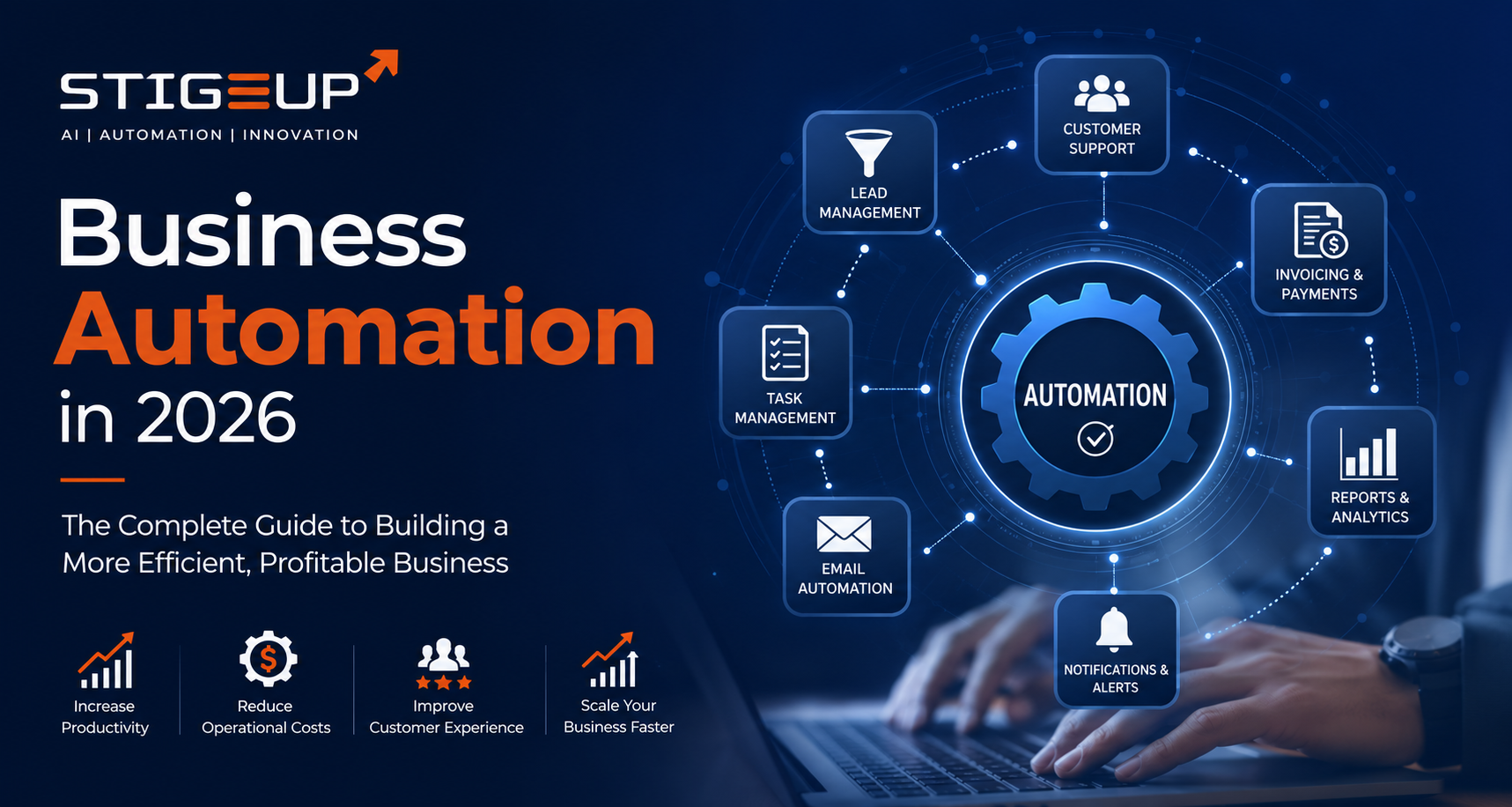
Business Automation: How Smart Systems Help Businesses Save Time, Cut Costs, and Scale Faster
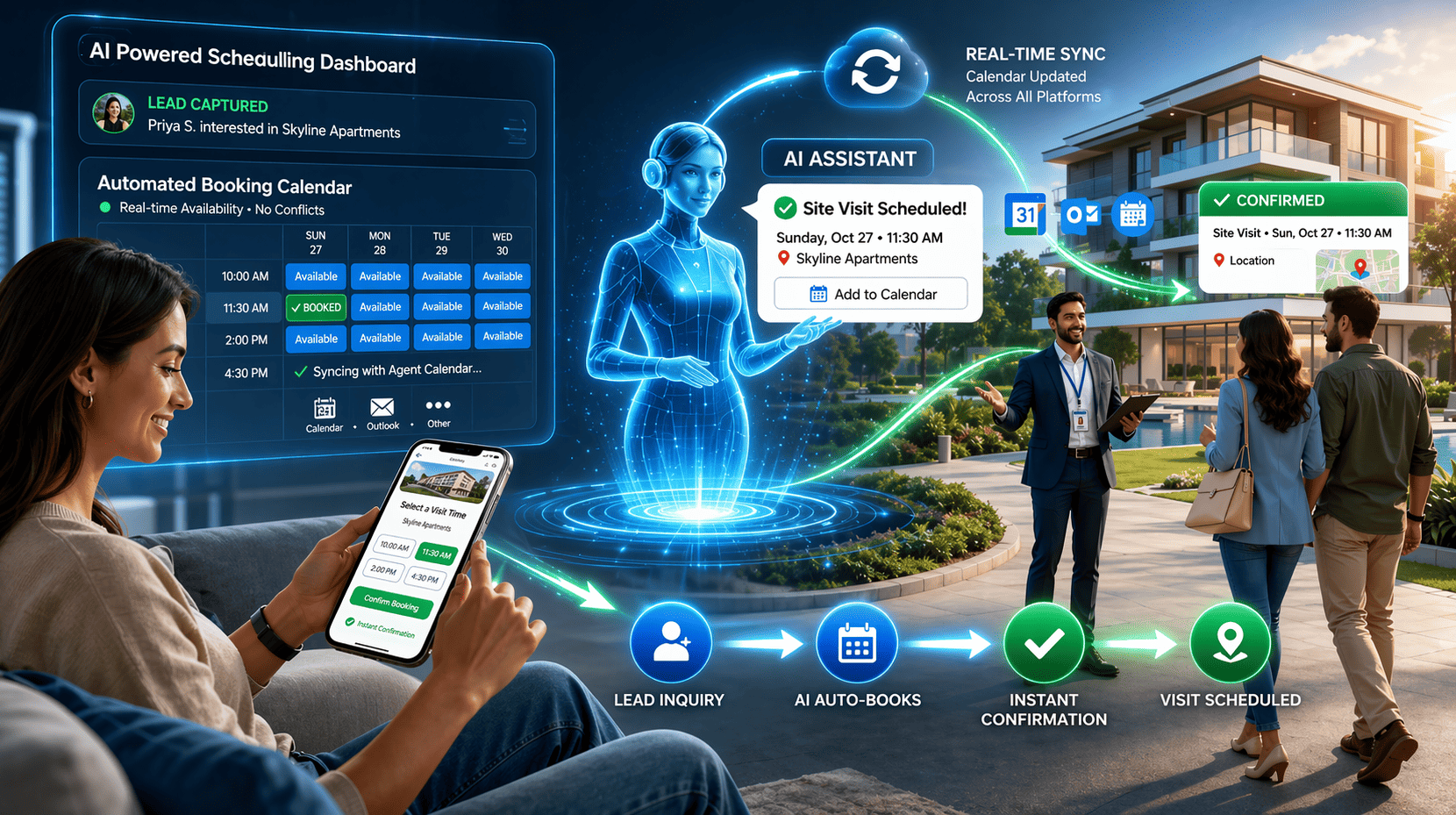
Automating the Real Estate Site Visit Lifecycle
A strategic blueprint for real estate developers on architecting autonomous, multi-agent systems to eliminate lead leakage, guarantee scheduling determinism, and maximize site visit conversion rates.